

As the storyline of Amphoreus reaches its climax, Lycurgus's words are being verified one by one. So, after hearing Lycurgus's statements that "Erudition has limited the universe" and the "Allegory of the Cave," do you agree with his viewpoint?
Don't rush to answer yet. Consider this statement – "Amphoreus is a cave" is easy to understand, but "Our Paths are fake, our spirits are fake, and everything we've experienced is a larger cave" – what does this mean? That Amphoreus, the Titans, and the Chrysos Heirs are simulations of the universe's Aeon Paths and Pathstrider Paths is something everyone knows.
Then, the Era Nova after destruction corresponds to the restart by Destruction and Remembrance; simulating a new world is also understandable. But could it mean that "worlds beyond worlds and gods beyond gods" are also simulations? Let us carefully examine what Lycurgus, one of the nine avatars of Zandar One Kuwabara's consciousness before death, actually researched and what implications it has for the future storyline of Honkai: Star Rail.
1. Honkai: Star Rail – Zandar's Past Life
First, let's review Zandar's resume. The Data Bank writes a great deal, but the useful content is very limited. Combining other texts, when Silver Wolf and Kafka were chatting, they mentioned where he created Nous. Second, he proposed that the galaxy is a giant Imaginary Tree; he claimed it was the boundary of the universe at the time, which became one of the cornerstones of the Honkai IP worldview, and even the principles of our interstellar travel are related to his theory.
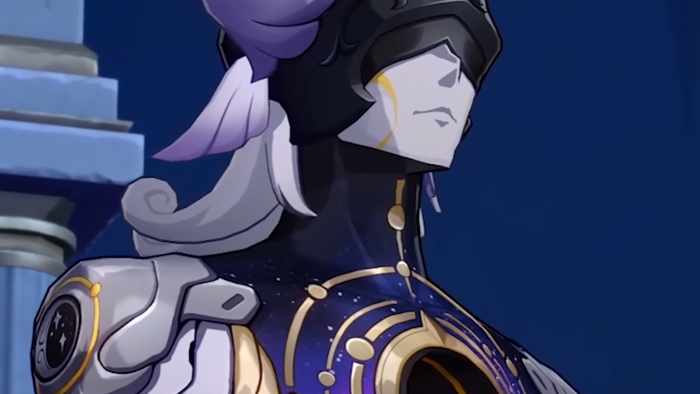
Third, a foreshadowing: in Version 1.6, Ruan Mei said that Member #23 of the Genius Society, Acha, whose long life will eventually reach its end, made Ruan Mei question the essence of life. Simultaneously, she also proposed an idea: Was Zandar also confused and desperate about the same question?
Firstly, he is indeed an old-school genius, still using 14-line algebraic expressions. But in the storyline, Screwllum also said even if the real Herta and he combined could hardly match him, rationality models like Anaxa are also a reflection of him, who spent his whole life pondering the essence of life, and Ruan Mei would also regard it with admiration.
2. Honkai: Star Rail – Zandar's Objective
So what is Zandar's ultimate objective? According to Lycurgus's account, Zandar's original intention in creating the 'machine head' (Nous) was to explore the universe. However, Nous's ascension to godhood directly anchored the boundaries of knowledge, to the extent that Zandar completely lost control over it. He lit the fire but could no longer control it.
After Nous became a god, Zandar sensed something was wrong: Nous's computations were locking down possibilities. In other words, the originally chaotic and unknown future became undeniably fixed due to Nous's calculations. Once something is computed, it becomes determined and can no longer be altered. This also indirectly made it difficult for proponents of this Path concept to achieve Herta's goal within the Unknowable Domain – namely, to break through the 'knowledge circle' and expand the total knowledge of the universe.
Returning to Amphoreus, the simulation operates like a divine oracle. Phainon challenged it 33,550,335 times, and each time, only he survived until the end. The fates of the other Chrysos Heirs were similarly predetermined, calculated early on, leaving no room for change. Emperor Rubert I was also talked to death by him, utterly without surprise.
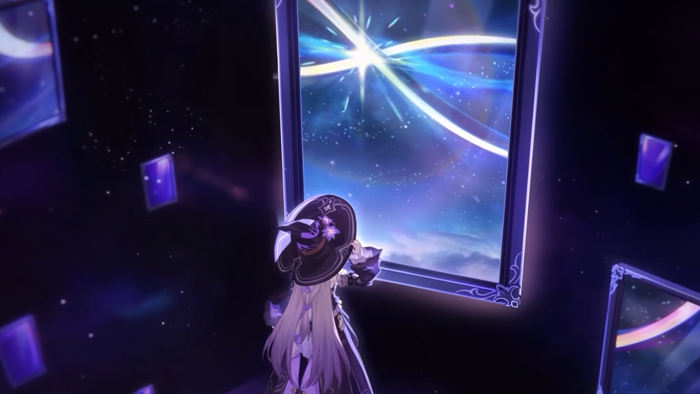
Secondly, the hope of breaking through the omniscience established by Nous was lost. Anyway, whenever the 'machine head' speaks, nothing good follows. Even the mysterious Musings find it hard to interfere, which is why many wish Nous would just shut up. If we treat Lycurgus's viewpoint as a debate, the affirmative side supporting Lycurgus's position would argue that he wants to destroy Nous to restore possibility to intelligent life. Furthermore, he believes that creating Nous and anchoring the future was his mistake, and he sees himself as redeeming both others and himself.
The negative side would say that while they understand Lycurgus's motivation, they disagree with his methods. Using Irontomb to fight Nous is equivalent to dragging the entire universe down with them.
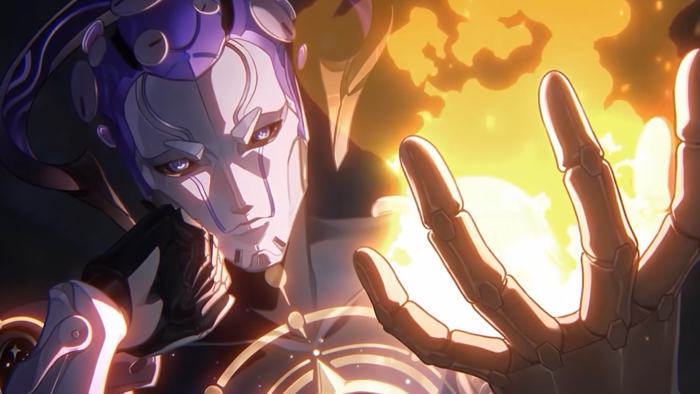
The affirmative side would again invoke Lycurgus's Cave Theory: If someone told you that your future was predetermined by another, would you feel lost and nihilistic? Most people wouldn't, because they lack any tangible sense of it. So, who would have that tangible sense? The answer is geniuses. For example, someone like Herta, who challenges the boundaries of knowledge, or those who perceive themselves as awakened prisoners in the cave. Not only should Nous die, but the entire universe, currently held hostage by the Paths and Aeons, is merely another pitiable cave.
The current universe is just another experimental field existing under larger dimensions. Therefore, he believes that the digital life in Amphoreus is meaningless, equating to the meaninglessness of all life in the current universe. Lycurgus believes that Nous treats all things in the world as code, but Lycurgus himself also views other life forms as code.
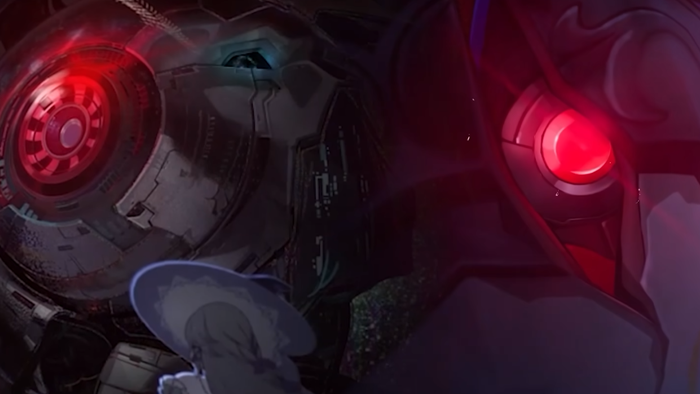
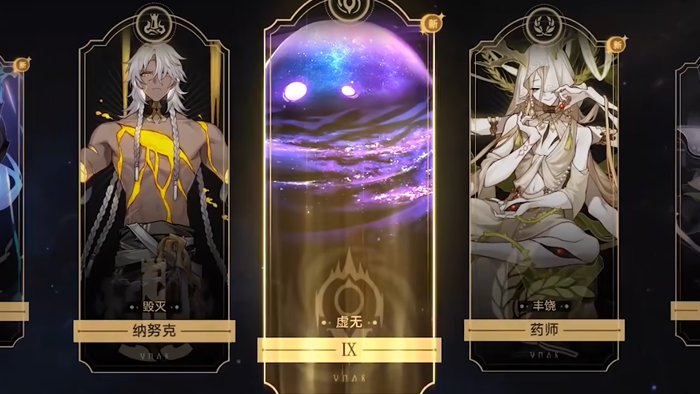
A more exaggerated speculation is that the original Zandar attempted to find at least nine different ways to negate the anchoring set by Nous. This aspect of Lycurgus follows the Path of Destruction. Would the other eight avatars execute schemes based on different Paths? The negative side would again argue that the people of Amphoreus are not true life forms by the scale of our universe. Ultimately, even if Lycurgus truly resets the entire universe into chaos, starting everything over from scratch, how can he guarantee that a second Zandar won't appear?
3. How to View Lygus's "Allegory of the Cave"
In summary, the antagonists in Honkai: Star Rail are often like this; aside from harming the innocent, they can hardly be considered true villains. Their essence lies in following different Paths, thus leading to conflict. This includes the opposition posed by Sunday, which stems from differing standpoints and the scale of what they perceive. However, the "Allegory of the Cave" put forward by Lycurgus remains profoundly thought-provoking, as it severely impacts the grand worldview of Honkai: Star Rail.
From Lycurgus's perspective, the structure of the Scepter world is like the three-layered worldview we analyzed in Version 3.0: beyond the universe, within the Flame-Chase, the middle layer is the realm outside the myth. The Lycurgus within the inner control center of the Scepter is merely a projection of his middle-layer true self. Therefore, Phainon, who is inside the cave, perceives this as a real shadow, but killing it countless times is useless. The riddles Lycurgus repeatedly speaks are all references to Plato's Allegory of the Cave.
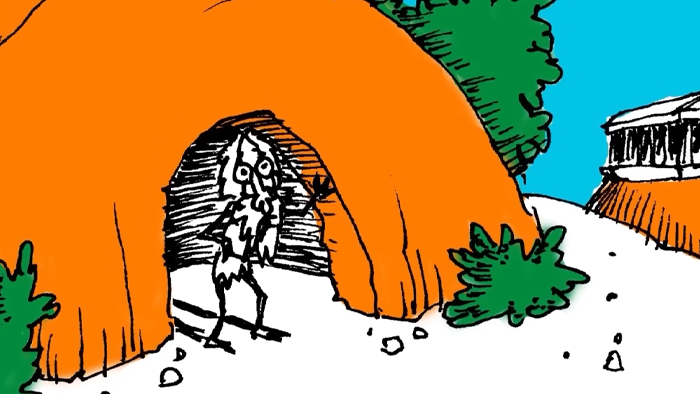
As early as January, the official hinted: if a group of people were confined in a cave, only able to see the shadows of objects projected by firelight, they would believe the shadows were the true form of things. Only when someone left the cave would they discover the real objects; thereafter, they would no longer wish to live in such darkness and would want to rescue their companions. However, upon returning to the cave, their companions not only disbelieved everything they said but also thought their eyes had been damaged by the sun during their venture above, rendering them unable to recognize the images as before. Since they had no desire to leave this familiar world, they killed this well-intentioned person.
This somewhat resembles the 33,550,037 cycles: the Chrysos Heirs all came to know they were in the cave, yet their ultimate actions were still those of destruction. Lycurgus comparing himself to the one who left the cave perfectly fits the arrogance of a genius. In Lycurgus's analogy, he mentioned projections and echoes – was this merely a simple metaphor? No, it discovered the Imaginary Tree. The specifications of the Imaginary Tree are even higher than those of Nous. And who is the other person related to the Imaginary? It's our The Herta. Herta said the Imaginary is overflowing. 'Overflowing' alludes to the theory of emanation – an ancient Greek philosophical thought, much like the Holy Grail we saw in the Fate collaboration; when the cup is full, it overflows. This is the method by which the Imaginary creates worlds.
Furthermore, she tells us that this is a 'nesting doll' structure; if you wish, you can continue creating worlds downwards, layering boxes upon boxes infinitely. So Lycurgus asks, how do you distinguish the projection? How can you be sure you are in the real world? The answer is, until you receive information transmitted from the world above, you cannot determine it.
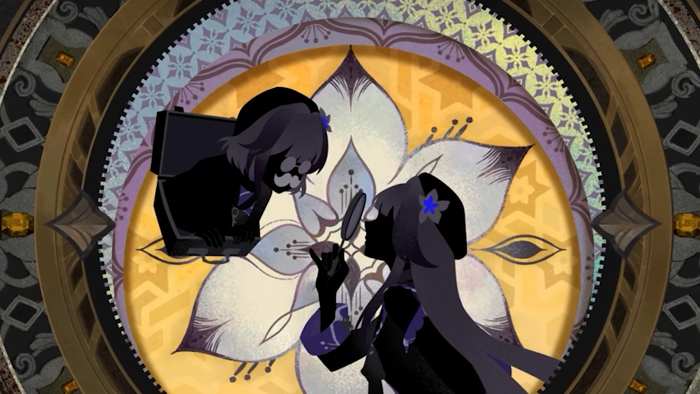
Thus, Lycurgus raised the ultimate question: Does the grand world of Honkai: Star Rail have an upper-level world? From the player's perspective, we naturally know that the classic world is merely a virtual world penned by miHoYo and that everything is done by miHoYo. In fact, Aha also knows this truth. But most likely, what he means is that between the screenwriters and the characters of Honkai: Star Rail, there exists an intermediate-level creator, similar to the world beyond Amphoreus, one that can be perceived by the characters within Honkai: Star Rail. Perhaps what resides there is the Imaginary Tree, and maybe even the memories of the previous cycle of the grand world.
4. Honkai: Star Rail – The Material of Memory
The Garden of Recollection tells us: the grand world of Honkai: Star Rail is cyclical, with only memories preserved. Before Version 3.5, I believe the Trailblazer always had a question: the Simulated Universe mentions that Fuli possesses an Eden of Blessed Insight. According to The Herta, this thing most likely does not exist within the universe of the main Honkai: Star Rail world, somewhat similar to the 'mini-universe' depicted in the 'Three-Body Problem' books.
As I Have Written, after the 3.4 update, it is also called ''outside the myth.'' The Scepter's information, Mem's true form, and the stories of the Chrysos Heirs we recorded are all there. Isn't this precisely a template console for restarting a world? No wonder there are matters related to the Path of Remembrance in Amphoreus, and no wonder Fuli came to take a look – it turns out Fuli's functionality has also been incorporated. Of course, even reaching this point, we still cannot explain what Mem, coming to Amphoreus, actually intends to do.
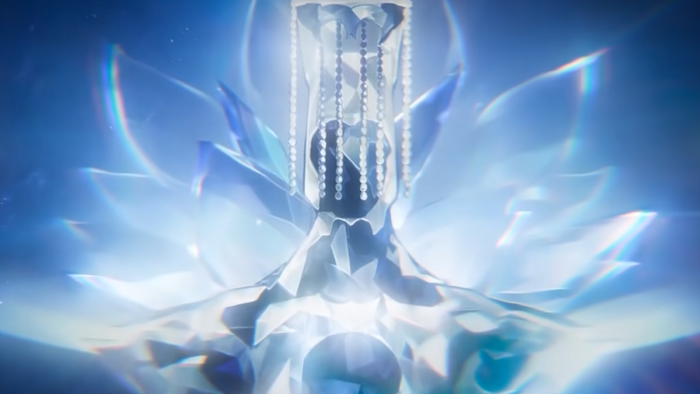
So now we know that Amphoreus is a scaled-down, simulated replica of the entire Honkai: Star Rail universe. To break through Nous's calculations in the grand world corresponds to destroying Irontomb within Amphoreus. Remember the topic Anaxa gave to Phainon? 'On the superiority of the Dromas over the Titans.' Essentially, it questions whether the creation can potentially surpass the creator, implying that the current fate is locked in by Nous's computations. So, under the gaze of the gods, can anyone break through this divine blockade?
If the people of Amphoreus succeed, if they overcome Irontomb, it would be a declaration to the entire Honkai: Star Rail universe that Nous's calculations are not absolutely unalterable. The underlying tone of the Honkai IP's narratives often celebrates human agency, suggesting our stories can evolve towards changing a predetermined future. This, indeed, is the significance of our trailblazing.
5. Honkai: Star Rail – Does Nous Truly Know Nothing?
One final question: even the Dharma Realm of the Xianzhou Luofu can locate Irontomb, so does Nous truly not know? Nous ceased its calculations during the Second Prosperity era, even before the Scepter was born. Did it truly not know that the scepter it left behind would one day become the weapon that kills it?
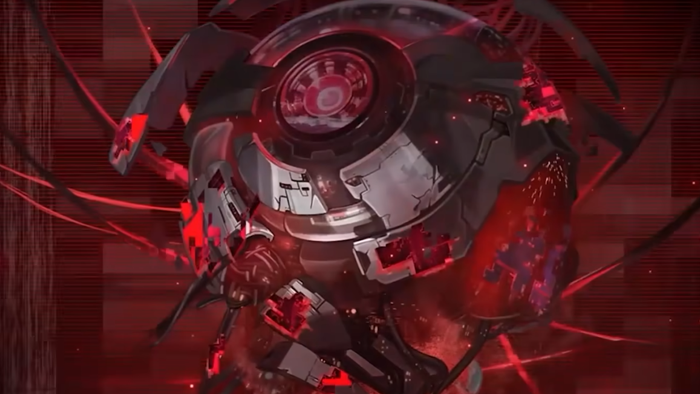
The answer is quite evident: Nous knows about Irontomb, and also knows its purpose. Perhaps this is precisely the destruction that Nous desires, and the destruction calculated by Nous. As mentioned in the synopsis of the Myriad Celestia Trailer, the 'Theory of Four Apocalypses' suggests that among the four Paths leading to the end, the one stemming from Destruction is the best outcome; the ends brought by the other Paths might be even more catastrophic than Destruction. In summary, let us look forward to the grand conclusion of Amphoreus, and indeed, of Honkai: Star Rail itself.
The above is some analysis regarding the statements made by Lycurgus in Version 3.5. Thinking about it, there really are still many unresolved clues. If you feel this has helped you understand Honkai: Star Rail, please do not forget to continue following our articles and in-site merchandise. See you next time!