

During our journey through Amphoreus, we encountered many "heroes." Among them, one character made a brief but unforgettable impression—Aglaea. When she first appeared, many Trailblazers even criticized and condemned her, yet now her reputation has greatly improved. What caused this shift? Let's explore together!
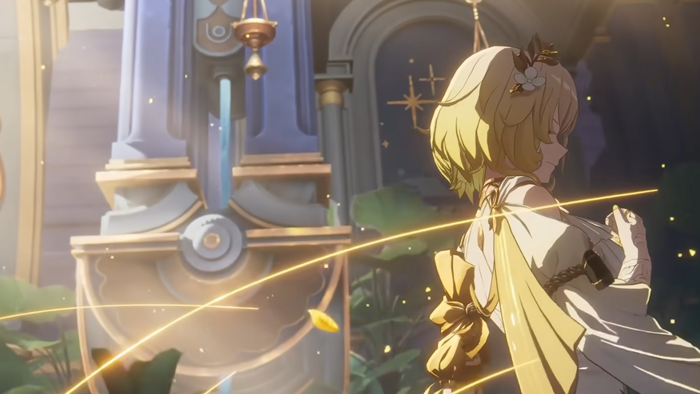
Some players may still dislike Aglaea because she once tested us with death. Though out of necessity—she was already on the verge of death and lacked time to verify our intentions—she resorted to the crudest method: binding and interrogating us. The interrogation was effective: it assessed our character, revealed our motives, and brought Phainon closer to us. The only cost was that Aglaea's relationship with us plummeted to rock bottom. Yet she did not care, precisely because she was about to die. Even her rival Anaxa marveled at how faint her soul had become before dissipating. She aimed to pave the way for the Chrysos Heirs with her remaining strength before her soul vanished—this was the choice she made.
Yet from our perspective, Aglaea has been failing continuously. Capturing and interrogating us was a failure in social interaction; at the Citizens' Assembly, her loss of humanity led to misspeaking, allowing the Council of Elders to seize leverage and costing her public support—a failure in negotiation. Due to her life nearing its end and waning power, she failed to detect enemy infiltration and schemes—a failure in personal capability. It's utterly disheartening. As the leader of the Flame-Chase Journey, she has been failing relentlessly since our arrival in Amphoreus. Can she truly guide the Flame-Chase?
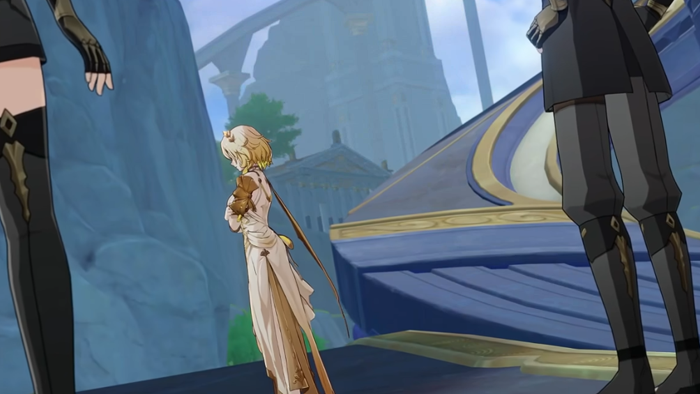
In Honkai: Star Rail, there isn't even dedicated story content for her character. In contrast, Tribbie, Mydei, Castorice, Anaxa, Hyacine, and Cipher all have their own storylines delving into their pasts and experiences. Phainon goes without saying—the entire Amphoreus narrative revolves around him. But recalling the whole of Amphoreus, the only memorable moments involving Aglaea that come to mind are her binding and interrogating us and the scene where she saved us during the fall. Beyond that, her presence feels remarkably faint.
Aglaea was like an NPC explaining history to us and assigning tasks, and then her role simply ended. This can be explained by something she once said to Tribbie: 'You and I will one day exit this stage. The fate of Amphoreus will be passed to others—this is the future Tribbie foresaw.' Thus, long ago, she decided to step back, deliberately leaving the stage lights for others. ' Even if we are clad in rags, what does it matter? Focus on weaving battle garments for the Messiah.
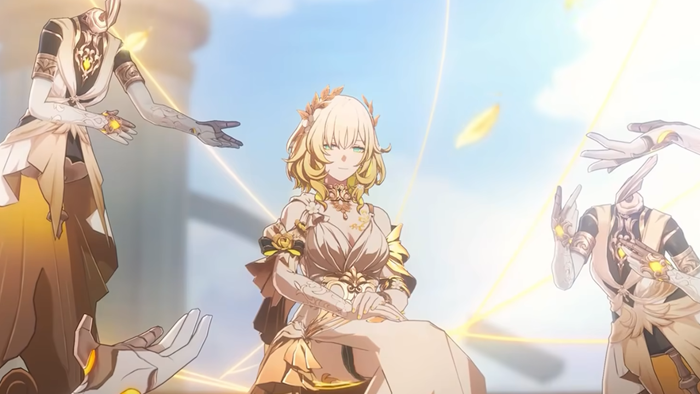
It is said that Aglaea died before the Era Nova, yet I believe Aglaea died three times. Aglaea's first death was the erosion of her humanity. She was once a romantic artist—emotionally delicate, dancing with the Garmentmaker she crafted, sneaking oatmeal from the temple at midnight. But the price of becoming a demigod was the constant loss of humanity. How ironic that the demigod of romance lost her emotions, forced to reason through everything. She no longer wove beautiful garments but instead wove the fate of the Holy City.
Aglaea's second death was the death of her body. She was already nearing death's door. Her golden threads could detect less and less. The Council of Elders avoided her threads to scheme in secret, threatening Aglaea with the eyes of deaf-mute children—if she did not yield, they would employ even more despicable means. Aglaea's last vestige of humanity stirred: for the children, for the Flame-Chase, she chose to face death. Yet in the end, we never witnessed her death scene; we learned the full story only from others' accounts. Aglaea was assassinated by the Council of Elders, falling from the demigod's bath. Her death saddened everyone deeply—not just as a comrade, but because she had become their spiritual leader. The golden threads that guarded the Holy City for millennia finally dimmed. Never again would someone who controlled the world with golden threads bring them security.
Aglaea's third death was the dissipation of her soul. This was her final effort for the Flame-Chase: filtering her residual humanity to forge her remaining divinity into a bracelet. Aglaea forced a period into a comma for her life. During the battle against Aquila, when the party fell from the sky, it was Aglaea's bracelet that protected them. Yet the bracelet accidentally fell into the golden pool. Her final death fulfilled the prophecy: "I shall bathe in warm, dazzling gold one last time." This was prophecy—and fate.

Aglaea's life has come to an end, yet she never once spoke of the suffering endured over millennia. One must understand that when Tribbie first shared the Prophecy of salvation, many refused to believe it. It's hard to imagine how arduous it was for Aglaea and Tribbie to initiate the Flame-Chase Journey. Worse still, Aglaea's family fortune was once consumed by flames. She started from scratch to rebuild her legacy, and even after expanding her influence and becoming a leader, she still had to engage in relentless strategic maneuvering with factions like the Council of Elders. Yet she never once doubted the Prophecy, never abandoned the Flame-Chase, and never forsook humanity.
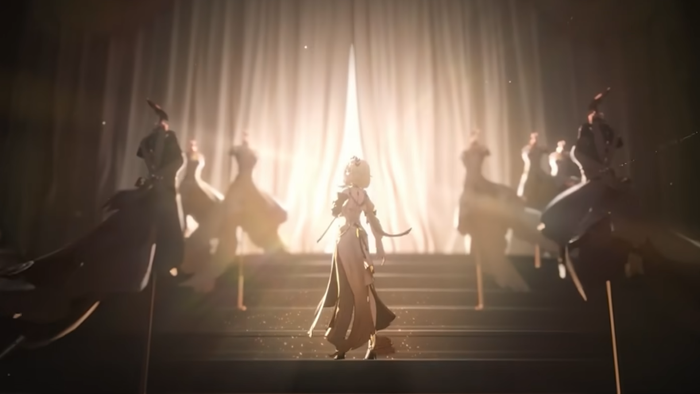
Through these subtle narrative details across versions, we gradually pieced together Aglaea's essence: beneath her detached exterior lay the most romantic aspiration—to complete the Flame-Chase Journey and usher in the Era Nova. Thus, for a millennium she guarded Okhema, for a millennium she walked the Flame-Chase path, for a millennium she endured the hardships of progress. Truly, she lacked a dedicated storyline—one that would unleash the anguish of her thousand-year struggle. Her tale should not remain shrouded in the background; she should not be disliked. She is the leader of the Flame-Chase Journey: Aglaea.