

"You will wither, make the deceased sprout from the remnants, the fire that died together is reborn" — this is the prophecy that Castorice heard when becoming a demigod. And such prophecies are possessed by every Chrysos Heir. We have known from the beginning that the Fire Pursuit is a journey of constant loss, with only one person surviving to the end to witness the Era Nova.
After three versions of buildup, surely everyone has gained a more genuine understanding of these two sentences. Now, let us tell the story about Castorice and death.
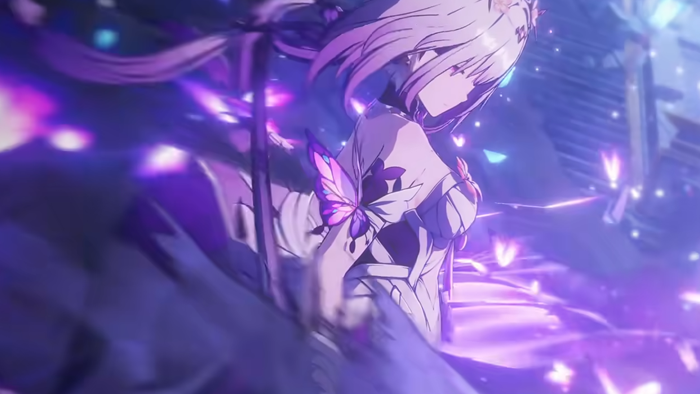
When life in the world withers, their souls will appear before Thanatos, and the Titan will deliver judgment upon the departed spirits. If it raises its left hand, the soul is granted death, entering the netherworld to await rebirth. If it raises its right hand, the soul is rejected by the netherworld and returns to the human realm. This is the dual nature of death, and it is also the destiny of the Chrysos Heir destined to inherit the divine authority of death.
In the previous cycle, the elder sister, Castorice, sacrificed herself to place her younger sister, Polyxia, upon the divine throne. The twins of death would sacrifice one of themselves during the trial; this is the price of godhood and the manifestation of the unification of the authorities of life and death. Therefore, when the great undertaking of creation was accomplished, the sacrificed one naturally would not reappear in the new world. "Fate is so unfair..." At least, that's what Polyxia thought.
The first thing she did after descending was to bring a life to this world. Polyxia molded Castorice's soul into form and sent it to the world of the living in the image of the great dragon Pollux. This act was tantamount to separating the originally unified authorities of life and death. The price Polyxia paid was the fall of her own death-half, Pollux, the moment it reached the world of the living. Pollux became a wall straddling the human realm and the netherworld, leaving only the remnant rationality "Polyxia" to guard the netherworld alone. With no Titan of Death left in the world, countless departed spirits wander the River Styx.
But even after paying the price, Castorice, Polyxia's sister, did not lead a life that could be called happy. Not many years after Queen Styxia entrusted Castorice to Amonet, she became the "War Supervisor" of Aidonia, responsible for granting people a merciful and impartial death. After leaving Aidonia, Castorice came to Okhema and met Aglaea, Tribios, and others. After a long passage of time, she encountered us. She found someone she could touch, people she could save. After learning of our circumstances, she chose to journey to the netherworld to face her destiny and become a demigod of death.
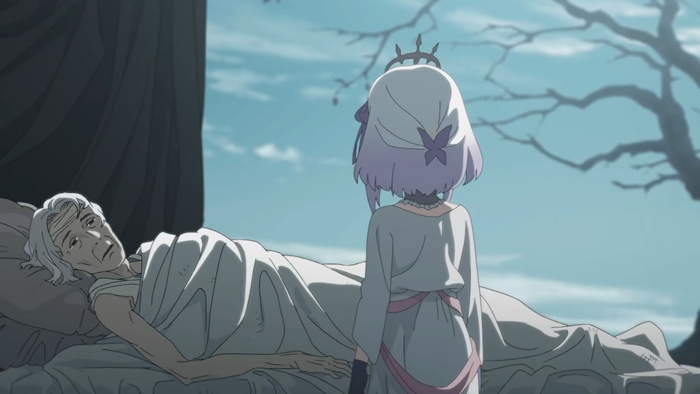
Throughout the three versions of the storyline, we can discover that Castorice has shown obvious aversion and fear towards "death" in the plot, which originates from her experiences in Aidonia. The reason why the journey is great and epic, why it is magnificent, is because all things have their time to perish. It cannot be denied that the people of Aidonia have their unique perspective on death. The elders did not raise Castorice as an executioner, but you cannot expect an inexperienced child to understand death. At an age when she should have been experiencing the beauty of life, to feel life slipping away at her fingertips is somewhat cruel.
When Castorice left Aidonia, she had already understood the weight of life through countless deaths, but she still failed to understand death itself. Even with companions participating together in the Fire Pursuit journey, she still denies death and even denies herself, once wanting to create a world without death. Denial brings confusion, and confusion brings seeking. And this talent of hers was bestowed by the god of death. So if appearing before death could answer the doubts in her heart? Castorice is naturally willing to try, but at the time of her birth, Thanatos no longer existed in the world. And this nightmare brings confusion, and confusion brings fear. Castorice always has the same dream.
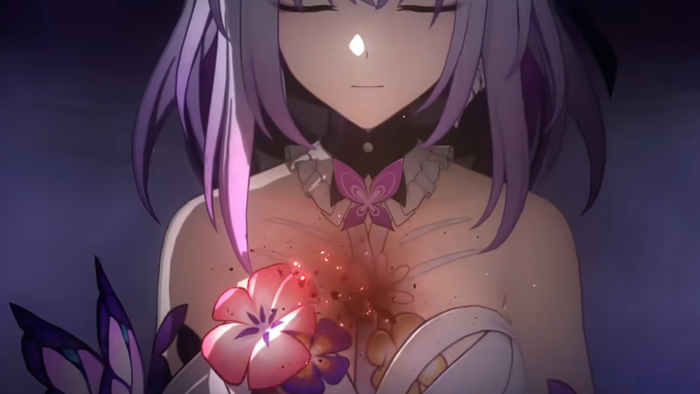
Just as depicted in her golden epic PV, all people embrace her, then part with her, and the anxiety brought by this nightmare reaches its peak when Castorice learns that we are the "grace of the already departed." Touch did not bring death. For Castorice, this was unprecedented; she was at a loss and dared not verify it again. So, when the truth was revealed, she lost comprehension. This moment truly suited the line, "I could have borne the darkness had I never seen the light." But the Trailblazer, after all, is someone who, even under Aglaea's judgment, can drag their good brother Dan Heng to seek "death" together, always laughing in the face of life and death. Moreover, our souls are merely wandering somewhere, which means we can still seek death. More importantly, this might be Castorice's only chance to save a life.
Thus, anxiety turns into loss, and loss in turn becomes resolve. The chosen Chrysos Heirs will all face their trial at a certain moment. Castorice is no exception, but unlike others, her trial was not about awakening the death-dragon Pollux from slumber in a Styxia high tower. Rather, it was a thousands-of-years-long arduous journey that began after its birth, all for seeking answers about death. And when she finally understood the meaning of death, her ascension to godhood naturally followed.
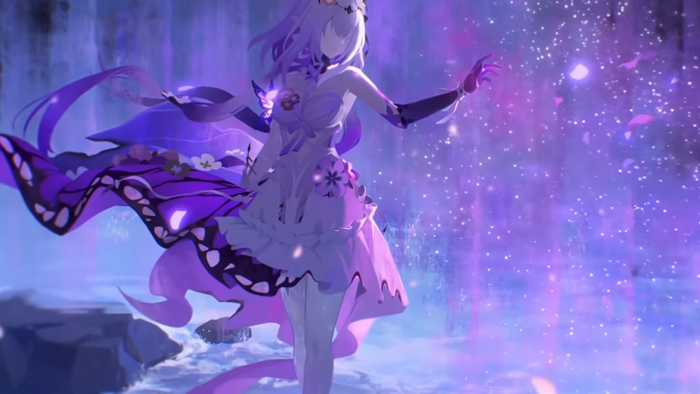
I never doubted the possibility of Castorice becoming a Death Demigod. Ever since feeding the Land Beast together with her, I felt she was a natural goddess of the underworld. From Aidonia to Okhema, she erected memorials for every life that passed away at her fingertips; from the human world to the netherworld, she left us a flower field before departing to cultivate a sea of flowers for all beings in the underworld. Because she constantly felt life slipping through her fingers, she could treat life as gently as a butterfly touching a blossom. Castorice brought death to Styxia, loathed death because of Aidonia, denied death in Okhema, and finally, understood death and became Death itself in Styxia.
She not only completed the cycle of questioning, understanding, becoming, and ultimate reconciliation but also closed the loop of her life's journey. Without death, none of this would have happened; the emotion named "cherishing" would naturally be born in Castorice's heart. "Because of death, we cherish."
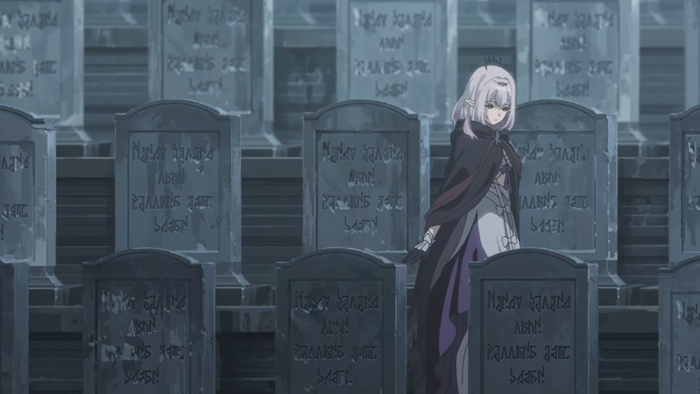
Such examples abound in Amphoreus, like Anaxagoras, the God of Poison. Anaxa's own death is simple to comprehend: "Hearing the Way in the morning, one may die content in the evening..." But to understand Anaxa's answer regarding death, we must first know what is meant by "the purest essence." Anaxa believed: All things originate from a single source and share the same constituent soul; the soul is like a seed, recording a person's partial memory of the world itself; the world is composed of souls, and souls carry memories. Therefore, the purest essence is memory.
If Anaxa sows his memory of the world as a seed within someone else's memory, allowing it to spread in the future, then his memory can exist forever. He can exist eternally in the form of memory within the world—this is the so-called purest essence. Looking back now at the True Eye given to Anaxa by Cerces, Anaxa's answer to death becomes self-evident: death is also the continuation of his life.
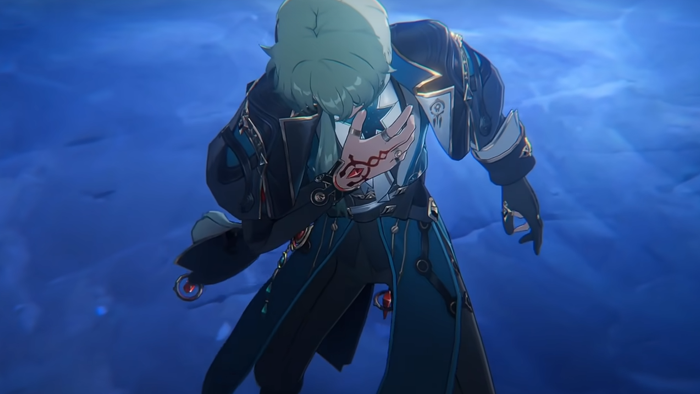
Furthermore, we actually know two other characters who must possess a considerable understanding of death—Mydei and Tribios. This version revealed the truth behind Mydei's immortality: he can die, but he will quickly swim back from the Styx. Departed souls generally cannot resist the temptation to drift along the Styx towards the underworld, so Mydei, in the storyline, needs to resist this temptation with his entire being. "It is not that death rejects him, but that he is rejecting death."
This point is quite interesting because Mydei does not merely reject death in this world; he also rejects the death of the Kremnos people. The Kremnos have always believed in the motto "Rather die in battle than return in glory." Dying on the battlefield following in the footsteps of Strife is the highest honor for them. Yet Mydei denied this motto, refused to become the king of the Kremnos, and ended the millennia-old tradition of his people.
Under the apocalypse, there is no need to create more meaningless sacrifices. If it's just about holding back the Black Tide, he alone is enough. No matter how many times he experiences death, he will return to the world of the living to continue his guardianship. So for Mydei, is death a medium for resisting fate, the beginning of the next conflict? Not entirely. "One day, you will die from a wound on your back." When that time comes, death might even become a form of release for him.
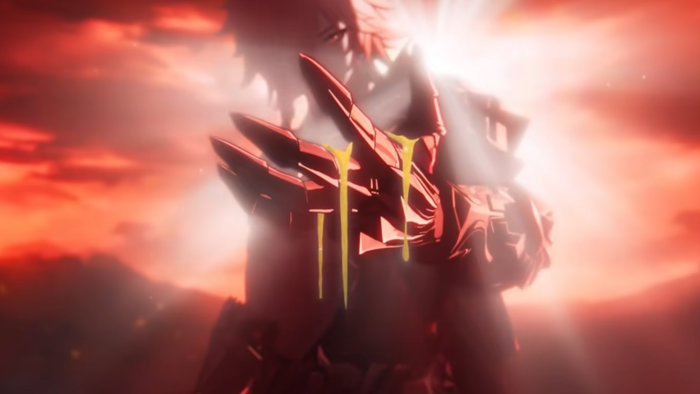
The other—Tribios. Like Mydei, he has personally experienced death many times. But unlike Mydei, who can return after each death, every death Tribios experiences is a genuine parting. As the first demigod of this Amphoreus cycle, Tribios not only bears his own truth but also carries the heavier burden of the Primordial Prophecy—a prophecy from the era when the Black Tide descended and a host of Titans fell silent. In the century after Tribios became a demigod and split himself into a thousand fragments, he experienced countless partings. Over half of these Tribios fragments died within that century, many not even perishing to disasters but dying at the hands of the humans he sought to save.
And all of this was merely to ignite the Fire Pursuit, simply because someone had to do something. The Fire Pursuit is a journey of constant loss. Within all this, even life is insignificant. To deliver hope, they are willing to die.
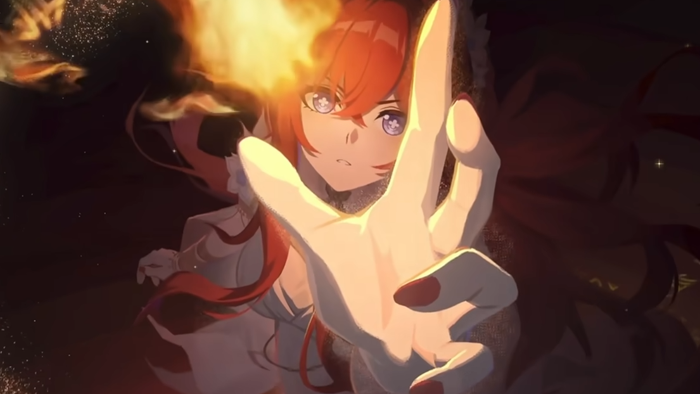
After appreciating the understanding of death held by these four Chrysos Heirs—Castorice's cherishing, Anaxa's continuation, Mydei's resistance, and Tribios's hope—I believe everyone has realized one thing: the twelve selected Chrysos Heirs possess entirely different views on life and death. This is natural, because each person has their own destiny.
In the future, we will certainly have the opportunity to appreciate more. For example, Aglaea, who has presided over the millennium-long Fire Pursuit journey, now maintains her existence with a fading soul. Another example is Phainon, the destined savior witness of the Era Nova. Currently, it seems that for him, all deaths are for the purpose of remembrance, so that he can carry the world's memories to achieve the final miracle. There are still others like Hyacine and Cipher whose stories have not been fully unfolded, but they will undoubtedly show us their own understanding of death, or death itself.
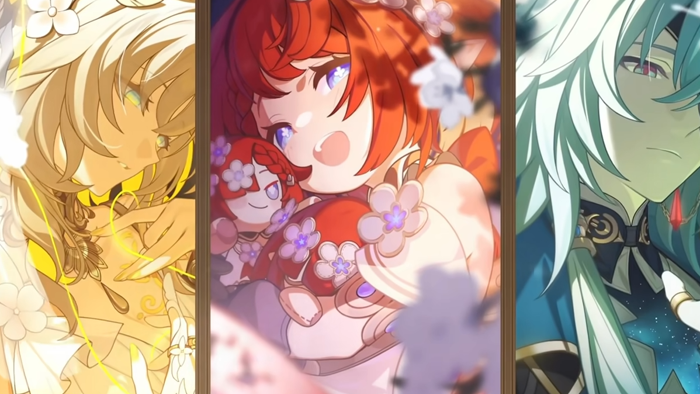
Castorice's journey from denying death to becoming death itself confirms the existentialist maxim—Heidegger's 'being-towards-death: only by confronting the inevitability of death can one live an authentic life.' As for Anaxa, whose name is Anaxagoras, he naturally resonates with the philosophy of Anaxagoras, though this resonance is not a strict inheritance. Anaxa's thought more like transcends idealism, leveraging the divine endorsement of his ideals while anchoring ultimacy in the individual rather than the cosmic whole. Yet, it is precisely this subtlety that reflects the characteristic of the Amphoreus worldview: human ideals are not extinguished within the divine order but transcend it to producing even greater humanity.
Mydei's refusal of death, returning repeatedly from the Styx, closely resembles the historical progression of Nietzsche's Overman philosophy—"under the shackles of fate, creating one's own value with an indomitable will; his very existence is the most fervent response to fate." And Tribios, they brought prophecies to the world and destiny to the Chrysos Heirs. They lived for the hope of the world, offering their bodies to the flame, becoming the first lamp beneath the long night. Death acts as a mirror, reflecting the weight and direction of life.
When we discuss death, we are ultimately discussing how to live. The Chrysos Heirs who embark on this journey, regardless of their differing destinies and ideals, undoubtedly share the same profound passion for the world.
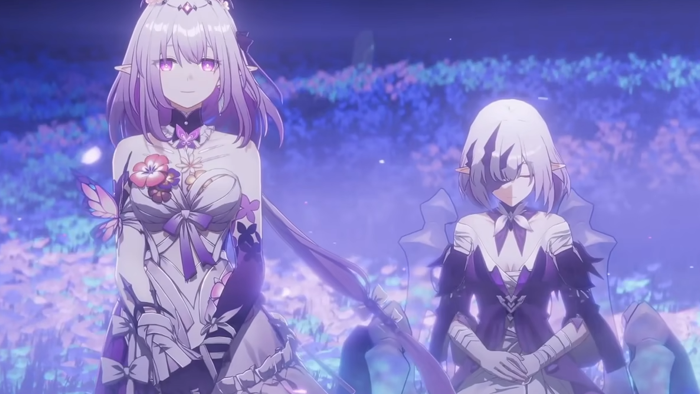
The Fire Pursuit is the only hope for Amphoreus, but its people do not press forward because they possess hope; rather, only by moving forward can they catch a glimpse of hope. Death is the most profound allegory within Amphoreus. It transforms the ephemeral splendor of a fleeting bloom into eternity, and turns the tears of parting into the anticipation of reunion. Death never strips life of its meaning; instead, it bestows upon life its contour. The Fire Pursuit will ultimately burn to its end, but what rises from the ashes is bound to be a prosperity that transcends the cycles of reincarnation.
This concludes all content regarding Castorice and death. Understanding Castorice is like filling in our comprehension of life itself. I believe this will surely enable all Trailblazers to better grasp the meaning of death. Of course, the content of Amphoreus extends far beyond this. Remember to keep following our articles. See you next time.