

Honkai: Star Rail is a turn-based game. Compared to Genshin Impact, it relies less on real-time operations and places greater emphasis on team composition rationality and the timing of skill usage. As a result, unique terms like "Speed" and "Break Effect" have emerged, which are more complex than those in Genshin. Today, we’ll explain some of Star Rail’s intricate concepts and terminology—master these, and you’ll become a pro Trailblazer.
1. Honkai: Star Rail Term—"Speed"
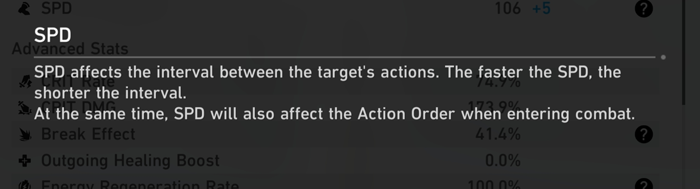
Regarding the function of Speed in Honkai: Star Rail, imagine each character (including enemies) running laps. When they reach the finish line, they take action, then start the next lap. High Speed offers two major advantages: first, acting first at the start of battle; second, completing laps faster to act again sooner.
Generally, Hunt, Harmony, and Nihility characters have higher Speed, allowing them to buff allies or debuff enemies first in combat. Destruction characters have moderate Speed; Abundance, Preservation, and Erudition characters are slower—their skills provide powerful protection or AoE damage, so their Speed must be lower to maintain balance.
2. Honkai: Star Rail Term—Turns and Cycles
When a character completes a lap and it's their turn to act, the player pressing any skill to make the character take action counts as one turn. Generally, Buff effects specify how many turns they last.
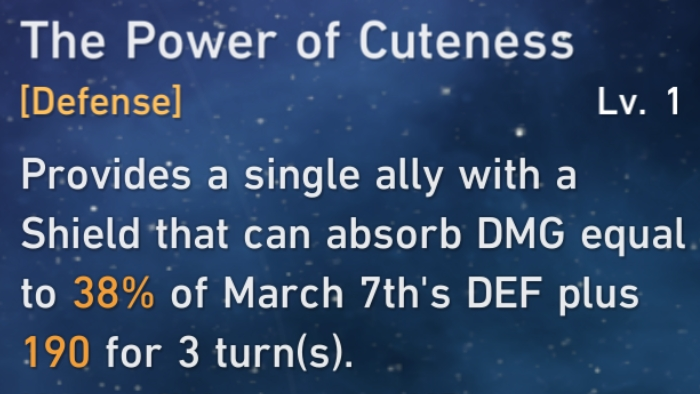
However, effects like March 7th's counterattack and Himeko's follow-up attacks can benefit from Buffs without consuming turn duration because these actions do not occur during the character's designated turn—the player did not press Q or E.
In the Forgotten Hall, the concept of cycles is introduced. Imagine a gym teacher timing with a stopwatch: every minute that passes equates to one cycle in the Forgotten Hall. Under cycle constraints, how fast you run and how many laps you complete depend entirely on your capability. This resembles Genshin Impact's Spiral Abyss, where star ratings are determined by remaining time."
3. Honkai: Star Rail Term—Break Effect
Break Effect enhances the damage dealt when breaking an enemy's weakness, the potency of Damage over Time (DoT), and the magnitude of action delay.
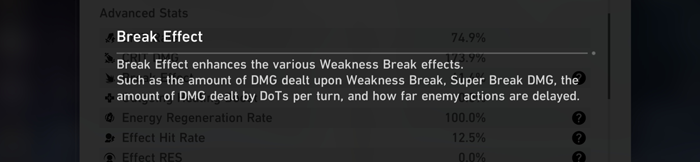
1. Damage upon triggering: When breaking a weakness, the enemy suffers additional damage. Higher Break Effect increases this extra damage.
2. Boosting DoT potency: Related to character attributes. Elemental damage not only breaks weaknesses but also applies various DoT debuffs. For example, breaking a weakness with Physical inflicts the Bleed debuff, dealing continuous Physical damage. Break Effect amplifies this damage.
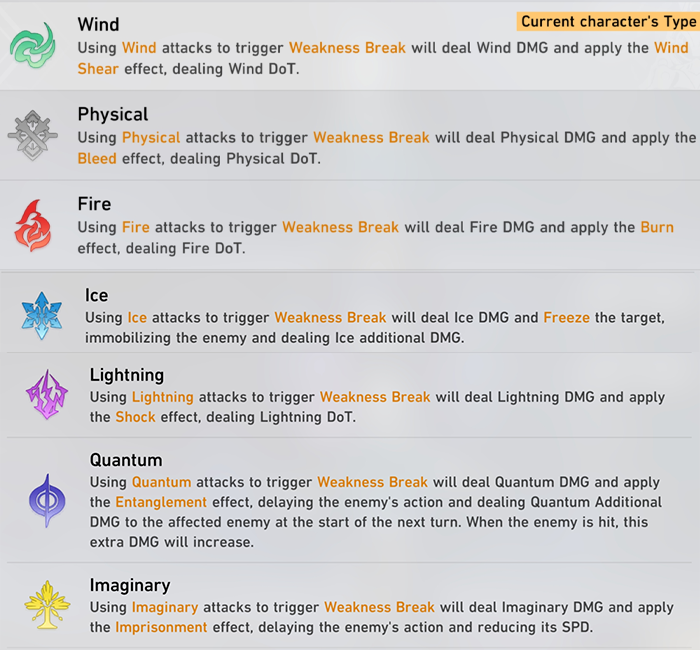
3. Extending action delay: Breaking a weakness delays the enemy's action. Upon their next turn, the weakness recovers. Break Effect prolongs this state duration.
Note: Break Effect only strengthens post-break effects. It does not improve a character's ability or speed in breaking weaknesses.
4. Honkai: Star Rail Terms—Energy Cap, Energy Regeneration Efficiency, and Ultimate
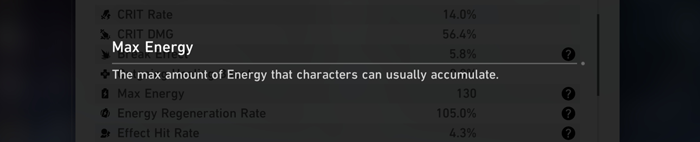
Characters recover Energy when attacking or being attacked. Ultimate abilities can only be used when Energy is full. The stronger a character's Ultimate, the more Energy it requires—for example, Jing Yuan's Ultimate needs 130 Energy. The 4-star character Tingyun is highly praised precisely because she can recharge a teammate's Energy, allowing them to use their Ultimate faster, such as in Tingyun and Jing Yuan's combo.
When a character's Energy is full, their Ultimate can be activated at any time, even outside their turn. However, after using the Ultimate, the character returns to their original position in the action order without affecting their next action sequence. In practice, we don’t immediately use Ultimates when Energy is full. For instance, if the main character’s Ultimate is ready but Tingyun’s turn is next, you should first wait for Tingyun to use her Skill to boost the main character’s ATK, then unleash the Ultimate to deal higher damage.
5. Honkai: Star Rail Term—Effect Hit Rate and Effect RES
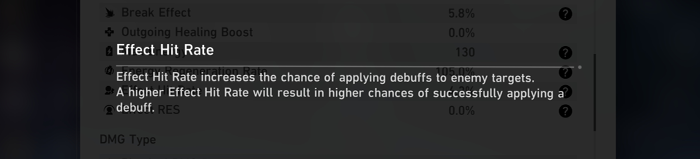
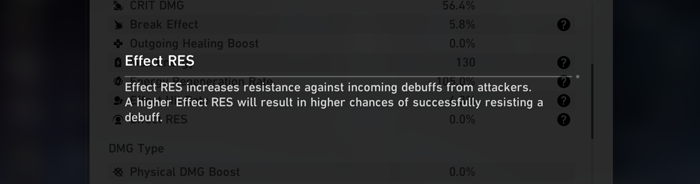
Whether we attack enemies or enemies attack us, the landing of debuffs is probabilistic. The higher the caster's Effect Hit Rate and the lower the target's Effect RES, the more likely the debuff is to land; conversely, it is more likely to be resisted. According to player testing, the specific formula is:
Success Probability = Base Probability × (1 + Effect Hit Rate) × (1 - Effect RES)
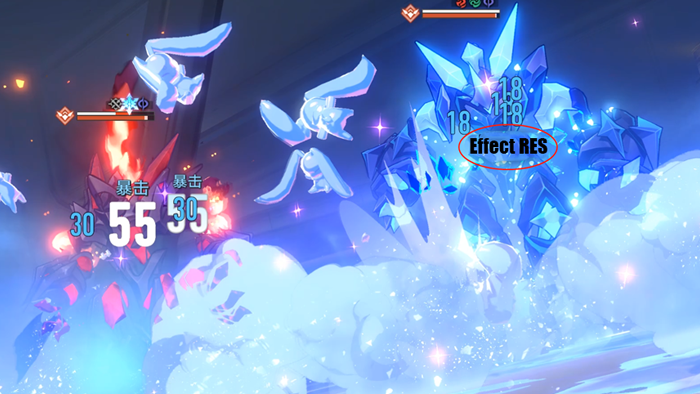
When fighting Bosses, they may possess immunity to specific debuffs, such as Freeze. In such cases, Effect Hit Rate and Effect RES become meaningless.
6. Honkai: Star Rail Term—Skill Point
At the start of battle, the team begins with 3 Skill Points, and the maximum storage limit for Skill Points is 5. All characters share Skill Points. When using a Basic ATK, 1 Skill Point is generated; when using a Skill, 1 Skill Point is consumed.
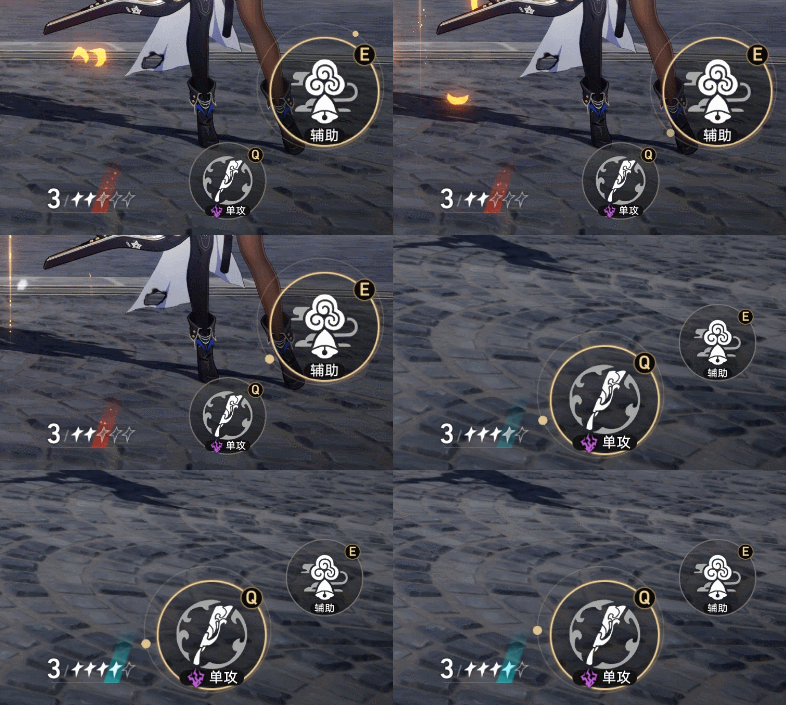
Therefore, when each turn arrives, wisely choosing whether to use a Basic ATK to generate Skill Points or a Skill to consume them will make your battles more efficient.
After understanding these concepts, you will gain a clearer grasp of Honkai: Star Rail’s combat system. Its operability and playability lie not in quick reflexes or perfect dodges, but rather in playing chess—each time it’s your turn, you can make different choices, and these choices ultimately impact the battle outcome.