

As the storyline of Amphoreus draws to a close, we are about to leave this land. Looking back, we have significantly improved our strength by following the Chrysos Heirs. After the great battle, the end of the Version 3.7 storyline presented us with the most weighty meeting: the Trailblazer directly encountered Nous. What exactly did this all-knowing machine head mean by asking us questions?
As early as two years ago, when "Erudition" was mentioned in the official "Fables About the Stars" PV, there was a Morse code sound in the background. Clever Trailblazers decoded it as "42," the ultimate answer of the universe. At the very end of the Version 3.7 storyline, when Nous spoke to the Trailblazer using The Herta's body, there was also a very distinct Morse code sound in the background. If we listen carefully, we can find that, regardless of its speed, it is the same segment—spelling out "Nous," the English name of Nous. It seems that the one we were conversing with was indeed Nous themself.
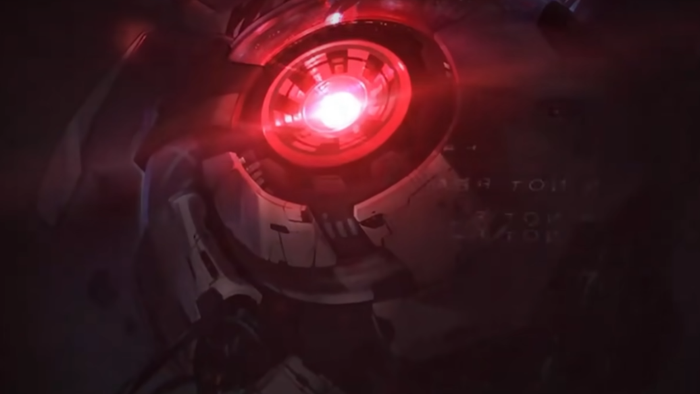
Then we must listen carefully to what Nous says, as this is our first genuine conversation with an Aeon. Nous's first statement was, "Nameless one, fateless one." This phrase last appeared in Lygus's words when he was discussing the theory of overflow. Earlier still, in the "Fables About the Stars" PV, when Black Swan mentioned it, it referred to the Trailblazer: 'Nameless one' signifies a Nameless, while 'fate-less one' means the Trailblazer is a variable not within fate's calculation.
The concept of "inevitably arrives" within this statement carries a flavor of determinism and existentialism. The subsequent statement follows similarly: "The Trailblazer and Nous have met countless times, at the universe's beginning and end." There are also the four moments calculated by Nous. Here, the four moments mentioned by Nous are the Borderstar Trade War, the First Imperial War, the Emperor's Fall, and the Godhunt War. The first three all originate from the Simulated Universe—"Gold and Gears." Even if Aeons like Equilibrium and Enigmata competed on the final "scalpel" that ultimately killed the Emperor together, they only managed to deviate the scalpel slightly. Nous's calculation was remarkably precise, so the fourth moment most likely refers to the Godhunt War.
Therefore, Nous asks, "If everything is inevitable, why do you trailblaze?" The all-knowing Nous actually started questioning us? The implication hidden within this question is that Nous likely only calculated the moments; he did not calculate the future and then choose these moments. This passage gives a sense that he seems to have a trace of helplessness.
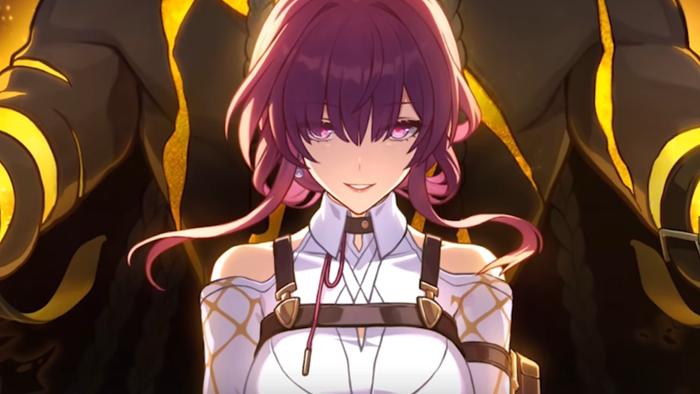
Then comes the second part. The second part follows the first, with an even more intense tone. Through the first part, Nous arrives at a conclusion: the starting point is unknown, meaning the starting point is not within Nous's calculations. The birth of Finality signifies that an endpoint must exist. There are four Paths that will lead the universe's outcome to Finality, and Nous does not know what the fourth Path is either. Currently, we know it is Remembrance.
So if the endpoint must exist, why do you trailblaze? Compared to the first question, this one is even sharper. Fortunately, Acheron had already prepared us psychologically. But based on the Trailblazer's answer, Nous obtains an answer—the endpoint is also unknown. Didn't it just say the endpoint was determined? How did it become unknown again? This reveals a piece of information to us: with the Trailblazer present, the fate of the universe will not turn towards certainty; the universe is chaotic.
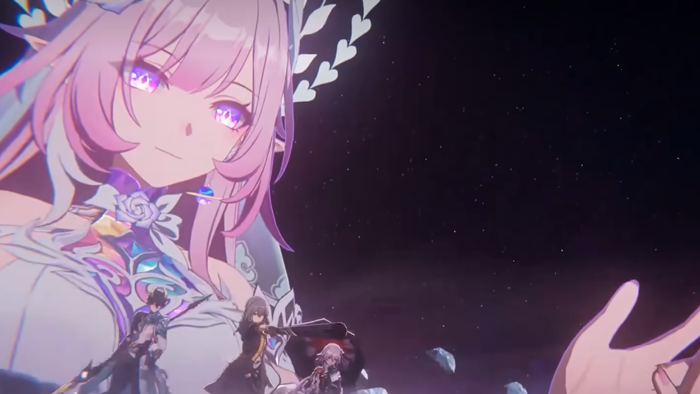
Then we come to the third part, concerning the Trailblaze. In the eyes of Nous, the Trailblaze is the opposite of chaos and certainty. But in the end, when neither Paths nor Aeons exist, when not even existence itself exists, that is to say, the Trailblaze will lead the universe to an outcome worse than the "Theory of Four Apocalypses". Then Nous continues to ask, "Why do you trailblaze?" This outcome actually has a real-world counterpart, which corresponds to the vacuum decay ending. Vacuum decay is something that could happen at any moment. If we break the fourth wall, this could even refer to the game servers shutting down, everything returning to nothingness. It's hard to imagine the pressure on the Trailblazer.
Next, it is Nous himself who pressures you. He is the one who knows all that exists, and he asks you, "Why do you trailblaze?" Here, whether you answer or not corresponds to "Gold and Gears." Whether you choose to question Nous in return, his answer is the same—Akivili, which is the Trailblaze. Then he leaves behind a symbol, representing the eternal question, which, in Lygus's words, is curiosity.
So what exactly did Nous calculate that made him so hesitant as to question the Trailblazer's will? Or, how much can the Trailblazer's will actually affect? This is something we will have to see in the subsequent storyline.
This concludes all the analysis regarding the ending of Version 3.7 of Honkai: Star Rail, specifically concerning the dialogue between the Trailblazer and Nous! I believe this will surely spark your interest in the future storyline. See you next time!